World fitness federation | World body building federation



2004
WORLD SPORT HISTORY. Looking Back: WFF-WBBF Searched for New Paths in the Development of International Sport.
The years 2003–2005 were an important turning point in the history of WFF-WBBF. After German Klaus P. J. Hoffmann withdrew from active international sports activities within the part of the WFF-WBBF federation he had led, Dr. Edmundas Daubaras became the sole leader of the organization continuing to oversee the federation’s international activities and its directions for sports development.
At that time, the federation faced not only organizational challenges but also much broader strategic questions: How should international sport continue to develop? What direction should fitness take? And how could a sports model be created that would not simply reproduce the traditional principles of bodybuilding?
Tradition Does Not Always Mean Progress
For decades, established models had become deeply rooted in the world of bodybuilding. Yet tradition in itself does not necessarily mean progress.
The WFF-WBBF leadership understood that moving forward required more than organizing another competition in the same format or mechanically repeating solutions that were already familiar. It was necessary to look for innovations, experiment, observe the results and not be afraid to change what had long been considered self-evident.
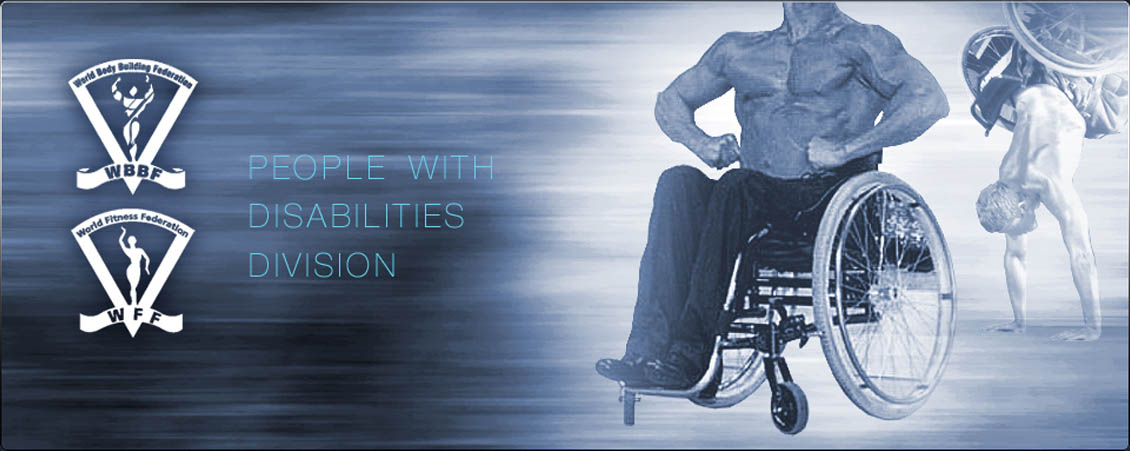
This approach had already been visible in the federation’s activities before 2003. In 1999, WFF-WBBF introduced children’s “Fit-Kid” and disabled athletes’ categories into its activities. This was an important step that broadened the very concept of sport – sport was no longer viewed solely as competition among elite athletes, but also as an activity in which children and people with disabilities should have their place.
Beginning in 2004, the federation also started organizing fitness model competitions. These decisions were not accidental. They reflected a broader effort to search for new forms of sport and to expand the very concept of fitness as a sporting discipline.
2004 – A Year of Experimentation
The year 2004 became a particularly significant period. Numerous national and international competitions were held in Lithuania, a major international “Amber Prix” tournament was organized in Riga, and an important European Championship took place in Moscow.
However, the significance of these events went beyond the sporting results themselves. At that time, WFF-WBBF was actively experimenting with different categories, judging criteria and competition formats.
The federation was searching for an answer to a fundamental question: What should the direction of modern international fitness sport be?
In many respects, this was an experimental period. Rather than simply adapting to an existing model, the federation was looking for ways to change it itself. What mattered was not only how an athlete looked on stage, but also how competitions could be organized, how athletes could be evaluated and how the sport could be perceived by spectators.
The goal was to find an optimal balance between athletic preparation, aesthetics, the attractiveness of competitions and the organization of international sport.
Vilnius – A Center of International Sport
One of the most important events of 2004 was the WFF-WBBF World Championship held at the Vilnius Congress Palace.
The event also received state-level attention. The championship was supported by the Government of the Republic of Lithuania, while an extensive report on the competition was broadcast by Lithuanian national television.
The championship brought together 378 athletes from 28 countries around the world. These figures clearly demonstrate the scale and international character of the event.
Almost all participating athletes were provided with free accommodation and meals in Vilnius hotels. Behind these figures was an enormous amount of organizational work. Hundreds of foreign athletes had to be welcomed, accommodated and provided with meals, while the organizers also had to manage the competition program, judging and countless other details involved in staging a major international event.
The 2004 World Championship therefore became not only a sporting challenge but also a major organizational test for WFF-WBBF.
The Creation of a Professional League
That same year, the federation took another significant step – it established a professional league and incorporated professional competitions into its official competition program.
This was important because the goal was not merely to create a system of individual championships, but a broader sports structure in which elite professional athletes could also have their place.
In this way, WFF-WBBF sought to connect different stages of an athlete’s sporting career – from children’s and amateur sport to the professional level.
State Attention to International Sport
The chairman of the organizing committee of the 2004 World Championship was Gediminas Kirkilas, at the time, a member of the Parliament of the Republic of Lithuania and Minister of National Defence, and later, from 2006, Prime Minister of Lithuania.
He personally signed the diplomas presented to the competition winners and participated in the international WFF-WBBF press conference held at the ELTA news agency.
These facts are also an important part of the history of that period. They demonstrate that WFF-WBBF international events in Lithuania attracted attention not only within the sporting community but also in broader public and governmental circles.
The 2004 World Championship – A Test of the Chosen Direction
The 2004 World Championship became, in a sense, a test of the direction WFF-WBBF had chosen.
The new categories, judging principles, competition formats and the concept of professional sport that had been tested previously were brought together within a major international event.
This is where one of the most important characteristics of that period can be seen: WFF-WBBF did not limit itself to declarations about sports development. It attempted to put its ideas into practice.
2005 – Continuation of the Direction
This work continued in 2005.
Another major WFF-WBBF World Championship was held over two days at the Vilnius Congress Palace. The chairman of its organizing committee was Algirdas Butkevičius, who at the time was a member of the Parliament of the Republic of Lithuania and Minister of Finance.
The fact that another major international event was organized following the 2004 World Championship demonstrated the continuity of the direction that had been chosen.
More Than Competitions – Searching for the Future of Sport
Looking back at these events from a broader historical perspective, the period of 2003–2005 should not be regarded simply as another stage in the organization of international competitions.
It was a period in which the federation was searching for an answer to a much more complex question:
What direction should sport itself take?
At that time, WFF-WBBF attempted to move beyond the traditional boundaries of bodybuilding. Children’s “Fit-Kid,” sport for people with disabilities, fitness model competitions, new categories, experiments with judging criteria and the creation of a professional league were different expressions of one broader direction.
The aim was to create a sports system that would be broader, more diverse and more open to different groups of athletes.
Therefore, the history of this period should not be measured solely by the number of medals won or competitions organized. Much more important was the attempt to change the very approach to sports development.
A simple truth was recognized – a truth that is not always implemented by sports organizations:
If sport wants to remain alive and attractive, it cannot stand still forever.
History Is Also About What People Dared to Search For
In 2003–2005, WFF-WBBF chose the path of exploration.
The federation experimented, searched for solutions, made decisions and tested whether those decisions worked in practice. Some of the decisions may have been controversial, and some later changed, but the underlying principle was clear:
Sport must evolve.
That is why this period can be regarded as one of the more important stages in WFF-WBBF history. It was a time when the federation sought not only to organize international competitions but also to develop its own vision of what the future of fitness sport could be.
More than two decades later, the decisions made at that time can be viewed from a different historical perspective. What may then have appeared to be an experiment or a bold attempt can today help us better understand the logic of sporting evolution.
New categories, children’s sport, the inclusion of people with disabilities, a system for professional athletes and large-scale international competitions were all attempts to create a broader world of sport.
History is not only about what was achieved at the time. It is also about what people dared to search for.
The activities of WFF-WBBF during 2003–2005 tell precisely this story: a period when tradition was no longer regarded as a sufficient answer, when new solutions were being sought and when there was an attempt to demonstrate that international sport could be not merely inherited, but created.
Therefore, the main conclusion of this period is simple:
WFF-WBBF was not looking for yet another way to organize competitions – it was searching for a new path for sport itself.